
The Gentle Power of Steam Infusion: Protecting Product Integrity in Thermal Processing
- Posted on 19th August 2026
- in Articles, Falling Film Evaporators, Steam Infusion
- by Jan de Geest
 Introduction: The Thermal Dilemma
In food processing, and especially egg and dairy processing, heat is a double-edged sword. We need it to reduce microbial load and extend shelf life, but excessive thermal stress from high heat can ruin the very things consumers love: fresh taste, vibrant color, and smooth texture.
For decades, direct steam injection has been applied for ultra-high-temperature (UHT) product treatment as a fast way to heat up a product, creating extended shelf life (ESL) or ultra-pasteurized products. However, its elevated steam pressure environment often comes at a steep cost to product quality.
Enter steam infusion—a gentle alternative that is transforming dairy, liquid egg, infant formula, and other protein-rich liquid product processing.
- Infusion vs. Injection: Breaking Down the Pressure Mechanics
The core weakness of traditional steam injection lies in its physics. To mix the heating medium with the food, high-pressure steam must be forced directly into the liquid product stream.
- The Injection Problem: Forcing steam into a liquid requires highly elevated steam pressure. Higher pressure inherently means elevated steam temperatures. This brute-force mixing creates harsh, localized hot spots at the injection point.
- The Infusion Advantage: Steam infusion completely flips the script. Instead of pushing steam into the product, the liquid product is introduced into a specialized chamber where it freely falls through a controlled steam environment. Because the product cascades naturally through the steam, you do not need high pressure to force mixing.
- The 5°F Approach Temperature: Eliminating Protein Damage
Because steam infusion eliminates the need for elevated pressure, it allows for incredibly tight control over thermal dynamics. In fact, the temperature difference (Delta T) between the heating steam and the product discharge can be as low as 5°F, an excellent approach temperature that protects product quality.
This incredibly narrow approach temperature ensures ultra-gentle heat transfer and yields critical functional benefits for dairy and food producers:
- Homogeneous vs. Average Temperature: In a direct steam injection environment, the final mixed temperature of the product might read at the desired setpoint, but this is merely an average. To reach that target, a portion of the product is severely overheated at the injection point while mixing with colder fluid. Conversely, steam infusion provides a homogeneous temperature treatment to the entire product stream, ensuring uniform thermal exposure and vastly superior final product properties.
- No Local Overheating: Because the steam environment is barely hotter than the target product temperature, harsh hot spots are completely eliminated.
- Clean-Label Flavor Profiles: Say goodbye to the stubborn “cooked” or burnt flavor profiles common in standard UHT dairy.
- Minimized Protein Denaturation: Delicate proteins remain intact, protecting the product’s natural structure, stability, and viscosity.
- No Discoloration: The lack of localized thermal stress prevents the Maillard reaction (browning), keeping milk and creams looking naturally bright and fresh.
- Case Study: Perfecting Liquid Egg Pasteurization
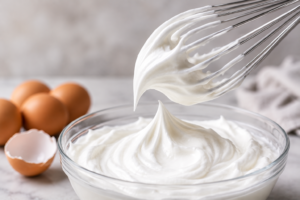
The definitive proof of steam infusion’s superiority is found in liquid egg pasteurization. Whole eggs and egg whites are incredibly heat-sensitive; a fraction of a degree of local overheating will instantly coagulate the proteins, turning a smooth liquid into useless scrambled clumps.
By utilizing a steam infusion chamber, processing facilities can safely pasteurize liquid eggs to achieve Extended Shelf Life (ESL) standards. Because the heat transfer is perfectly uniform, completely homogeneous, and operates at such a low Delta T, the egg proteins suffer zero functional damage. The final product retains its full molecular functionality, meaning it will still whip, foam, emulsify, and bind perfectly for industrial baking and food production.
Quick Comparison: Infusion vs. Injection
| Feature | Steam Injection | Steam Infusion |
| Mechanism | Steam is forced under pressure into the liquid. | Liquid product cascades through a steam chamber. |
| Steam Pressure | High (to overcome liquid backpressure). | Low (requires no mechanical forcing). |
| Approach Temp (Delta T) | High (steam must be much hotter than the product). | Ultra-Low (as low as a 5°F difference). |
| Temperature Profile | Non-uniform (average setpoint reached via local overheating). | Homogeneous (every drop receives identical thermal treatment). |
| Local Overheating | Common (creates scorching at injection points). | Eliminated (uniform heat transfer). |
| Protein Integrity | High risk of denaturation and flavor alterations. | Full protein functionality and fresh flavor locked in. |
Let’s Talk About Your Application
Are you looking to elevate your product quality, protect your delicate formulations, and command the top dollar your product deserves? Contact us today to discuss the potential of steam infusion for your specific product pasteurization applications!

“Our goal is to give you the best evaporator and dryer process balanced between capital investment and operating expenses with the highest product quality. This way you can differentiate yourself in your market with either commodity products or special niche products.”
- Restoring Condenser Vacuum Through CIP of Cooling-Water Tubes: A Whey Industry Case Study - August 26, 2026
- The Gentle Power of Steam Infusion: Protecting Product Integrity in Thermal Processing - August 19, 2026
- Internal Product Feedlines in Falling Film Evaporators: A Hidden Source of Fouling in Dairy Applications - July 17, 2026